












Is your bike losing pickup even when the engine is revving normally? Are you experiencing difficulty changing gears or noticing a burning smell while riding? These could be signs of a worn-out clutch plate.
The bike clutch plate replacement cost in India generally ranges from ₹600 to ₹4,000 for many commuter and mid-range motorcycles. Premium and performance bikes can cost more, depending on the clutch assembly and additional parts required.
For popular motorcycles such as the Hero Splendor Plus, Honda Shine, Bajaj Pulsar, TVS Apache and Royal Enfield Classic 350, the total repair bill depends on the clutch plate set, labour charges, engine oil and any damaged components.
This guide explains clutch plate replacement costs in 2026, common warning signs, model-wise estimated prices and how to avoid unnecessary repairs.
Bike Clutch Plate Replacement Cost in India 2026
The cost of replacing a motorcycle clutch varies according to engine capacity, clutch design, spare-part quality and workshop location.
| Bike Category | Estimated Total Replacement Cost |
|---|---|
| 100–110cc commuter bikes | ₹600–₹1,500 |
| 125cc commuter bikes | ₹800–₹1,800 |
| 150–160cc motorcycles | ₹1,000–₹2,500 |
| 180–200cc motorcycles | ₹1,200–₹3,000 |
| 250–350cc motorcycles | ₹1,500–₹4,500 |
| Premium and performance bikes | ₹3,000–₹8,000+ |
These are indicative repair budgets, not fixed manufacturer service prices. They assume a typical clutch plate replacement with routine labour. Complete clutch assembly repairs can cost substantially more.
Clutch Plate Replacement Cost for Popular Bikes in India
If you own a commonly used motorcycle, the following table can help you estimate your repair expenses.
| Bike Model | Estimated Replacement Cost |
|---|---|
| Hero Splendor Plus | ₹700–₹1,500 |
| Hero HF Deluxe | ₹700–₹1,500 |
| Honda Shine | ₹800–₹1,800 |
| Honda SP 125 | ₹900–₹2,000 |
| Bajaj Platina 110 | ₹700–₹1,600 |
| Bajaj Pulsar 150 | ₹1,000–₹2,200 |
| Bajaj Pulsar NS200 | ₹1,500–₹3,000 |
| TVS Apache RTR 160 | ₹1,000–₹2,500 |
| TVS Apache RTR 200 4V | ₹1,500–₹3,200 |
| Royal Enfield Classic 350 | ₹2,000–₹4,500 |
These model-wise figures are approximate planning estimates, not verified dealer quotations. Exact costs depend on model year, required parts, workshop and location.
Hero Splendor Plus Clutch Plate Replacement Cost
The Hero Splendor Plus is one of India's most widely used commuter motorcycles. Its clutch assembly is relatively straightforward, which generally keeps replacement expenses manageable.
A typical replacement may cost approximately ₹700–₹1,500, depending on whether the mechanic replaces only the friction plates or additional clutch components.
Hero also offers a genuine clutch assembly kit for compatible Splendor and related models. Always confirm the correct part number for your motorcycle's model year.
Bajaj Pulsar Clutch Plate Replacement Cost
The Bajaj Pulsar range includes several motorcycles with different engine capacities and clutch assemblies.
For a Pulsar 150, the estimated clutch replacement cost is ₹1,000–₹2,200. Models such as the Pulsar NS200 may require a higher budget because of their different clutch components.
Before replacing the clutch plates, have the mechanic check clutch cable adjustment and inspect the clutch springs.
Royal Enfield Classic 350 Clutch Plate Replacement Cost
The Royal Enfield Classic 350 uses a multi-plate wet clutch system. Its replacement cost is generally higher than that of smaller commuter motorcycles.
Owners can budget approximately ₹2,000–₹4,500 for clutch plate replacement, depending on the motorcycle generation, clutch kit and associated repairs.
The mechanic should also inspect the steel plates, clutch basket and springs. Replacement of additional components can increase the total bill.
What Is a Bike Clutch Plate and How Does It Work?
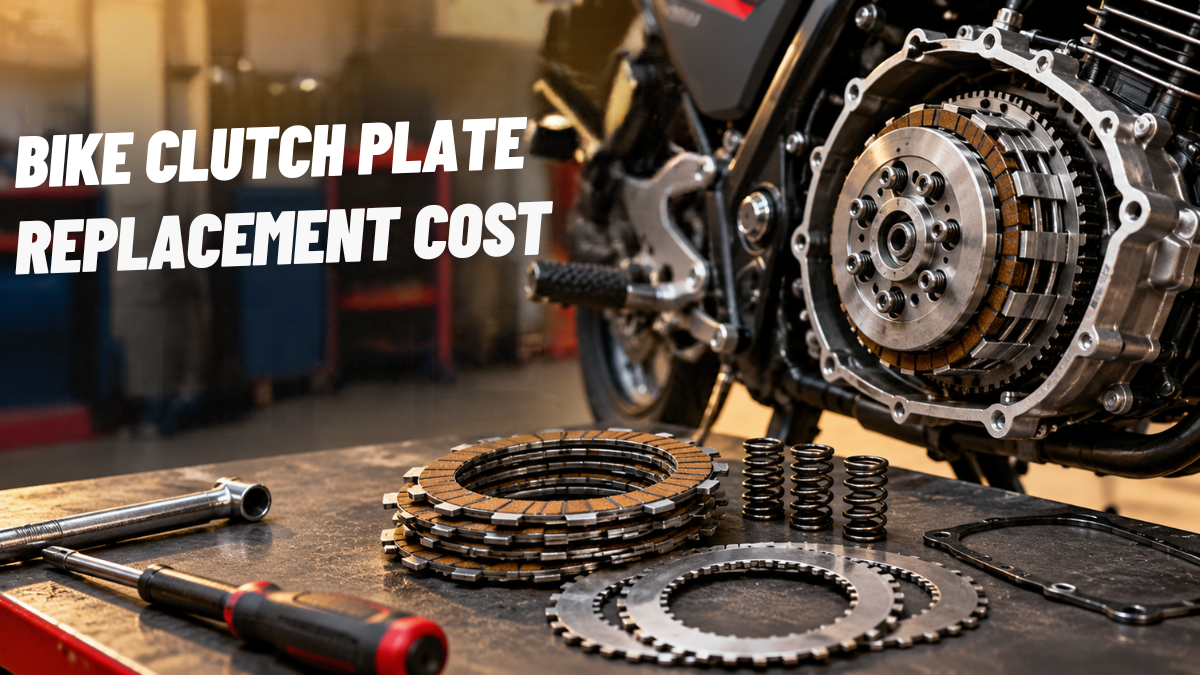
A clutch plate is part of the system that transfers engine power to a motorcycle's transmission.
When you release the clutch lever, the clutch plates engage and allow engine power to reach the gearbox. When you pull the lever, the clutch disengages, making it possible to change gears or stop without stalling the engine.
Most manual motorcycles use a multi-plate wet clutch, meaning the plates operate in engine oil.
Over time, the friction material can wear down because of repeated engagement, excessive slipping, heat and riding habits.
A damaged clutch can affect acceleration, gear changes and overall riding comfort.
7 Signs Your Bike Clutch Plate Needs Replacement
A worn clutch plate does not always stop working immediately. In many cases, the symptoms develop gradually.
1. Engine RPM Increases but Speed Does Not
This is one of the clearest signs of clutch slipping.
For example, when accelerating in a higher gear, the engine speed may rise quickly without a matching increase in road speed.
However, clutch cable adjustment or incorrect oil can sometimes produce similar symptoms.
2. Difficulty Changing Gears
If your motorcycle becomes difficult to shift, the clutch may not be disengaging properly.
Possible causes include worn plates, incorrect cable adjustment, clutch drag or transmission-related problems.
3. Poor Pickup and Acceleration
A slipping clutch cannot transfer engine power efficiently to the rear wheel.
You may notice weak acceleration, particularly when carrying a passenger or riding uphill.
4. Burning Smell
Excessive clutch slipping creates heat and may produce a burning smell.
If this happens repeatedly, avoid heavy acceleration and have the motorcycle inspected.
5. Jerking While Releasing the Clutch
If your bike shakes or jerks while moving from a standstill, the clutch may be engaging unevenly.
Warped steel plates, worn friction plates or other clutch assembly problems can cause this behaviour.
6. Unusual Clutch Lever Feel
A clutch lever that suddenly feels too loose, too tight or engages at an unusual point may indicate an adjustment or mechanical issue.
This symptom alone does not confirm that the clutch plates need replacement.
7. Reduced Performance Under Load
A worn clutch may become more noticeable when riding uphill, accelerating with a pillion passenger or carrying luggage.
If the engine revs increase without proportional acceleration, clutch slippage should be investigated.
Bike Clutch Plate Replacement Labour Charges
Labour charges depend on workshop type, motorcycle design and the complexity of the repair.
| Workshop Type | Indicative Labour Charges |
|---|---|
| Local motorcycle mechanic | ₹200–₹500 |
| Multi-brand bike workshop | ₹300–₹800 |
| Authorised service centre | ₹400–₹1,200+ |
These are broad estimates. Premium motorcycles or repairs involving additional dismantling may cost more.
Example Cost Breakdown
Suppose your motorcycle requires a clutch friction plate set costing ₹800.
| Repair Item | Estimated Cost |
|---|---|
| Clutch friction plate set | ₹800 |
| Labour charges | ₹400 |
| Gasket and small consumables | ₹150 |
| Engine oil, if replacement is required | ₹450 |
| Total Estimated Cost | ₹1,800 |
The final amount may be lower if the oil does not require replacement or higher if the steel plates, springs or clutch basket are damaged.
Ask for a written estimate before approving the repair.
How Long Does a Bike Clutch Plate Last?
There is no fixed replacement interval for motorcycle clutch plates.
Under typical conditions, some motorcycle clutches may last 25,000–40,000 km, while others can last much longer with careful riding and proper maintenance.
Clutch life depends on several factors:
-
Riding in heavy traffic
-
Frequent half-clutch usage
-
Carrying heavy loads
-
Aggressive acceleration
-
Incorrect clutch free play
-
Engine oil condition and specification
-
Quality of clutch components
A motorcycle used mainly on open highways may experience less clutch wear than one operated in stop-and-go traffic every day.
Important: Do not replace the clutch simply because the motorcycle has crossed a particular kilometre reading. Replacement should follow proper diagnosis.
How Is a Bike Clutch Plate Replaced?
A qualified motorcycle mechanic generally follows these steps:
-
Inspect the clutch cable or hydraulic system and confirm the symptoms.
-
Drain engine oil if required by the repair procedure.
-
Remove the clutch cover and access the clutch assembly.
-
Inspect the friction plates, steel plates and springs.
-
Measure components against the manufacturer's service limits.
-
Replace worn or damaged parts with compatible components.
-
Reassemble the clutch using the specified torque settings.
-
Refill the correct engine oil if necessary.
-
Adjust clutch free play and check gear engagement.
-
Test the motorcycle to confirm proper operation.
The work may take approximately 1.5–3 hours for many motorcycles, depending on workshop workload and repair complexity.
Clutch replacement requires suitable tools and technical knowledge. Incorrect assembly can damage the clutch or create unsafe riding conditions.
Genuine vs Aftermarket Clutch Plates – Which Is Better?
Motorcycle owners can generally choose between genuine manufacturer parts and compatible aftermarket alternatives.
| Factor | Genuine Clutch Plates | Aftermarket Clutch Plates |
|---|---|---|
| Fitment | Designed for specified models | Depends on manufacturer |
| Price | Often higher | Can be more affordable |
| Quality consistency | Manufacturer specification | Varies by brand |
| Availability | Authorised dealers | Local and online spare-part shops |
| Best For | Owners prioritising verified compatibility | Buyers using reputable compatible parts |
Genuine clutch components are generally the safer choice when part compatibility is uncertain.
However, reputable aftermarket manufacturers can also offer suitable replacements. Avoid unbranded parts with unclear specifications.
Can You Ride a Bike With a Damaged Clutch Plate?
Riding with a slipping or damaged clutch is not recommended.
A severely worn clutch may cause poor acceleration, overheating and loss of effective power transfer.
If the motorcycle struggles to move, develops a strong burning smell or cannot engage gears properly, stop riding and arrange professional assistance.
Continuing to ride may increase repair costs and create safety risks.
How to Increase Bike Clutch Plate Life
Good riding habits can reduce unnecessary clutch wear.
Avoid riding the half-clutch: Keep the clutch fully engaged during normal riding. Use partial engagement only when necessary for controlled starts or low-speed manoeuvres.
Do not rest your fingers on the clutch lever: Constant pressure may prevent complete clutch engagement.
Use the correct engine oil: Follow the manufacturer's recommended oil grade and clutch compatibility specification.
Maintain proper clutch adjustment: Incorrect free play can cause slipping or incomplete disengagement.
Avoid holding the bike on slopes using the clutch: Use the brakes instead.
Service your motorcycle regularly: Periodic inspection can identify cable, lubrication or adjustment problems before they become expensive.
When Should You Replace the Clutch Plate Instead of Repairing It?
Not every clutch problem requires a new plate set.
If the problem is caused by incorrect cable adjustment, a damaged cable or unsuitable engine oil, fixing that issue may restore normal operation.
Clutch plates generally need replacement when their friction material is below the manufacturer's service limit, they are damaged, or persistent slipping remains after other causes have been ruled out.
A mechanic should inspect the clutch assembly before recommending replacement.
Final Verdict
The bike clutch plate replacement cost in India in 2026 can range from approximately ₹600 for simpler commuter motorcycle repairs to ₹4,000 or more for larger motorcycles.
For everyday motorcycles such as the Hero Splendor, Honda Shine and Bajaj Pulsar, replacement is usually more affordable than for premium bikes.
Before spending money on a new clutch plate set, check the clutch adjustment, engine oil specification and condition of related components.
Choosing compatible parts and maintaining good riding habits can help extend clutch life and prevent unnecessary repair expenses.