








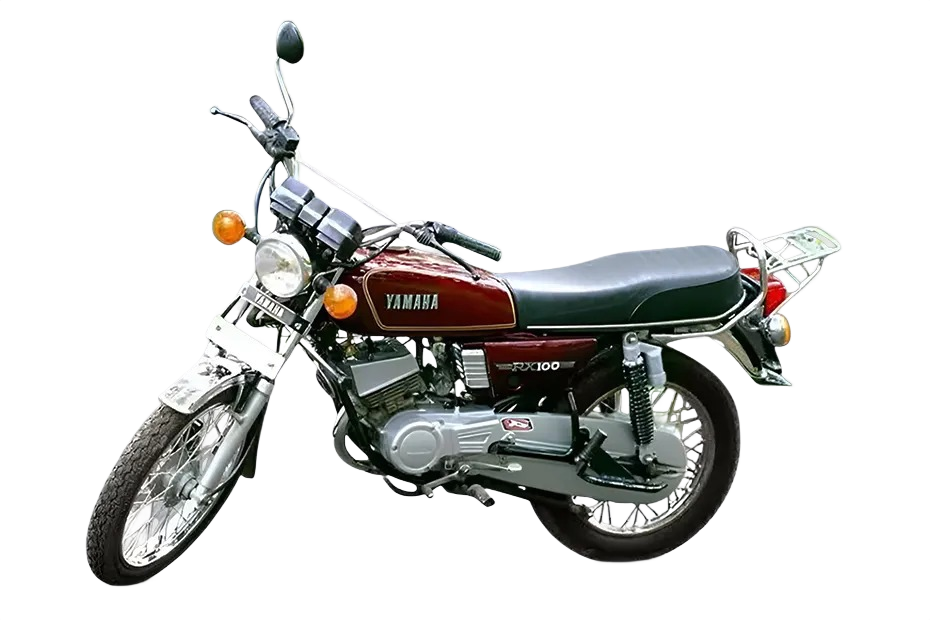
Yamaha RX 100
₹ 1 L
Upcoming
Remember the thrill? The iconic sound that announced its arrival? The sheer exhilaration of a true legend on two wheels? We're talking about none other than the Yamaha RX 100, a name that still resonates with unmatched passion and nostalgia across India. This isn't just a motorcycle; it's a piece of history, a symbol of raw power, agility, and pure riding joy that captured hearts for decades. Even today, its legacy continues to inspire a fervent community of enthusiasts and riders.
Given its legendary status and the fact that it's no longer in production, the Yamaha RX 100 price in India is now determined by the robust and thriving used bike market. Depending on its condition, year of manufacture, and the level of restoration, you can find a Yamaha RX 100 for sale anywhere from ₹35,000 to over ₹1,50,000. A well-maintained or lovingly restored model often fetches a premium, reflecting its timeless appeal and enduring demand.
The Yamaha RX 100 mileage, while not its primary claim to fame, was respectable for its era and the exhilarating performance it delivered. Riders typically experienced around 35-45 km/l, varying significantly with riding style and meticulous maintenance. Its powerful 98cc, 2-stroke engine delivered a punchy 11 PS of power, offering instant acceleration and a thrilling ride experience that few bikes could match. Despite its compact size, the RX 100 was renowned for its robust build and ability to carry a decent load, making it a versatile companion for daily commutes and more. Its efficiency lay in its quick response and easy maneuverability through city traffic.
The Yamaha RX 100 dimensions were perfectly suited for Indian roads, striking an ideal balance between agility and stability. With a manageable body size, including a length of approximately 1965mm and a kerb weight of around 103 kg, it was incredibly nimble in city traffic. While specific GVW (Gross Vehicle Weight) and payload capacity figures for its time are hard to compare with modern standards, it was widely known to comfortably carry two riders with ease. Its compact design allowed for easy parking and effortless weaving through congested streets, making every ride efficient and enjoyable. The fuel tank capacity was 10.5 litres, ensuring a good range between refills.
The Yamaha RX 100 was, and still is, a fantastic choice for various use cases, even if largely cherished for personal enjoyment now. It excelled as a daily commuter for city dwellers, offering quick sprints and effortless navigation through busy lanes. For enthusiasts, it’s a prized possession, often meticulously restored for weekend rides, vintage bike rallies, and club gatherings. Its peppy performance also made it a favourite for quick errands or short inter-city trips, proving its mettle as a reliable personal transport. While not designed for heavy commercial use like modern cargo bikes, its inherent toughness and legendary performance were undeniable.
Even decades after its production ceased, user reviews and sentiments about the Yamaha RX 100 are overwhelmingly positive. Owners fondly recall its incredible reliability, easy maintenance, and the sheer joy of riding it. It's often hailed as one of the most trustworthy and enjoyable bikes ever sold in India, a testament to Yamaha's enduring engineering prowess. While official service support for new parts isn't widely available, a vibrant community and a network of skilled local mechanics ensure these bikes continue to run smoothly, showcasing incredible long-term serviceability and an active aftermarket.
The Yamaha RX 100 was largely known for its core model, though minor cosmetic updates and colour schemes appeared over its production run. It didn't have distinct 'variants' in the way modern bikes do. In its heyday, its primary competitors included bikes like the Kawasaki Bajaj KB100 and the Suzuki Shogun, each vying for the top spot in the performance segment. Today, it stands in a league of its own, an undisputed icon whose spirit and raw riding experience are unmatched, making any contemporary 'best bike in India' attempts to capture its magic fall short.
If you're looking for a motorcycle with soul, undeniable speed, and an iconic legacy, the Yamaha RX 100 remains an exceptional choice for any discerning rider. It's more than just transport; it's a collector's item, a symbol of freedom, and a ride that promises a smile every single time you hit the road. Its enduring appeal and passionate following perfectly illustrate why it's considered a true 'best bike in India' by generations of enthusiastic riders. Don't just ride; experience the legend, experience the Yamaha RX 100.
About the ‘Yamaha RX 100’
The Yamaha RX 100 is an iconic two-stroke motorcycle. It was celebrated for its robust performance and agile handling. This legendary model served as a versatile standard commuter bike. However, it also appealed strongly to performance enthusiasts. Young riders, daily commuters, and those seeking an exhilarating ride were its primary audience. The RX 100 held a unique position in Yamaha's lineup. It became a benchmark for compact, powerful two-stroke machines. Its design was minimalist yet sporty, featuring classic lines and chrome accents. Key strengths included its impressive acceleration and legendary reliability. The RX 100 was lightweight and easy to maintain. It was ideally suited for nimble city navigation and spirited mixed usage. It offered a thrilling riding experience for its time.
‘Yamaha RX 100’ Price in India
The Yamaha RX 100 is a discontinued model. It is not available as a new bike. During its original run, the ex-showroom price in India ranged from approximately ₹18,000 to ₹25,000. This pricing positioned the RX 100 for budget and mid-range buyers. Factors like its 98cc engine and basic features defined its cost. Today, it can only be found in the pre-owned market. Prices for used models vary widely. This variation depends on the bike's condition, year, and authenticity.
‘Yamaha RX 100’ Variants and Specifications
The Yamaha RX 100 primarily came in one standard variant. Minor cosmetic updates were introduced over its production period. Its engine was a petrol-powered, two-stroke unit. The engine displacement was precisely 98cc. It delivered strong performance for its class. Peak power was around 11 bhp. Torque output stood at approximately 10.39 Nm. These figures ensured quick acceleration. The expected mileage was about 35 to 40 kilometers per liter. This varied with riding style and conditions. It featured a smooth-shifting 4-speed manual transmission. Being a petrol motorcycle, charging time is not applicable.
Features and Technology
The Yamaha RX 100 featured a straightforward design prioritizing function. Key safety features included reliable drum brakes on both the front and rear wheels. Advanced braking systems like ABS were not available during its era. Comfort and convenience were basic yet effective. The bike offered a simple analogue speedometer and fuel gauge. It featured a standard kick-start mechanism. The single, long seat provided adequate comfort for city commutes. Its lightweight construction contributed to ease of handling. Build quality was renowned for its robustness and durability. This ensured a firm yet agile ride. Connectivity or digital features were not part of its technology package.
Mileage, Performance, and Riding Experience
The Yamaha RX 100 was celebrated for its lively performance. It offered incredibly quick acceleration and pick-up. This made it a joy to ride in real-world conditions. It was exceptionally well-suited for city usage. Its lightweight chassis allowed for effortless navigation through congested traffic. The bike also handled short highway runs competently. However, it was not designed for long-distance touring. Its responsive engine and nimble handling made riding on varied Indian road conditions very easy. Many riders loved its "pocket rocket" feel. This provided an exciting and engaging experience every time.
Competitors of ‘Yamaha RX 100’ in India
During its active production, the Yamaha RX 100 faced competition from several models. Its primary rivals included the Suzuki Shogun. The Kawasaki Bajaj KB100 and RTZ also competed directly. The TVS Suzuki Shaolin was another strong contender. These models vied for market share in the performance-oriented commuter segment. Competition was based on engine performance, features, and overall reliability. Each competitor aimed to offer a similar blend of power and practicality to Indian buyers.
.webp)